Few things are more unsettling than pressing the brake pedal and feeling your steering wheel shudder in your hands. Braking vibration is not something to adapt to or ignore — it's a symptom of a mechanical problem that, left unaddressed, gets worse and can compromise your ability to stop safely. At AutoZmotive in Holmesburg, brake inspections are one of the most common services we perform, and warped rotors are far and away the most frequent culprit. But the fix is not always the same, and diagnosing the problem correctly matters.
Warped Brake Rotors: The Most Common Cause
The brake rotor is the large metal disc that the brake caliper squeezes when you press the pedal. Over time and with repeated heating and cooling cycles, rotors can develop an uneven surface — what technicians call lateral runout or thickness variation. When the caliper clamps down on an uneven rotor, you feel a rhythmic pulsation or shudder through the pedal and often up into the steering wheel. The shaking typically gets worse as you press the brake harder and may be more noticeable at highway speeds than in city driving. Rotors that are thick enough can sometimes be machined flat on a brake lathe, but if they're already at minimum thickness, replacement is the correct repair.Brake Pad Deposits
Glazed or unevenly deposited brake pad material on the rotor surface can cause a similar vibration. This happens when brakes are overheated — a long downhill grade with the brakes dragging, for instance — or when new pads are bedded in improperly. The pad material transfers unevenly to the rotor face and creates high spots that cause pulsation. In some cases, a careful burnishing procedure with new pads and resurfaced or replaced rotors resolves the issue. In others, the rotors need to be replaced entirely.
Worn or Loose Wheel Bearings
A worn wheel bearing can produce vibration that varies with vehicle speed and sometimes feels similar to brake shudder. The distinction: wheel bearing vibration is often present while driving straight (not just during braking) and may be accompanied by a humming or growling noise that changes pitch with speed. A quick test is to gently weave back and forth at low speed — if the noise and vibration change as you shift weight, a wheel bearing is a likely suspect. Loose wheel lug nuts are another possibility that's easy to check and immediately dangerous if ignored.Stuck or Seized Brake Calipers
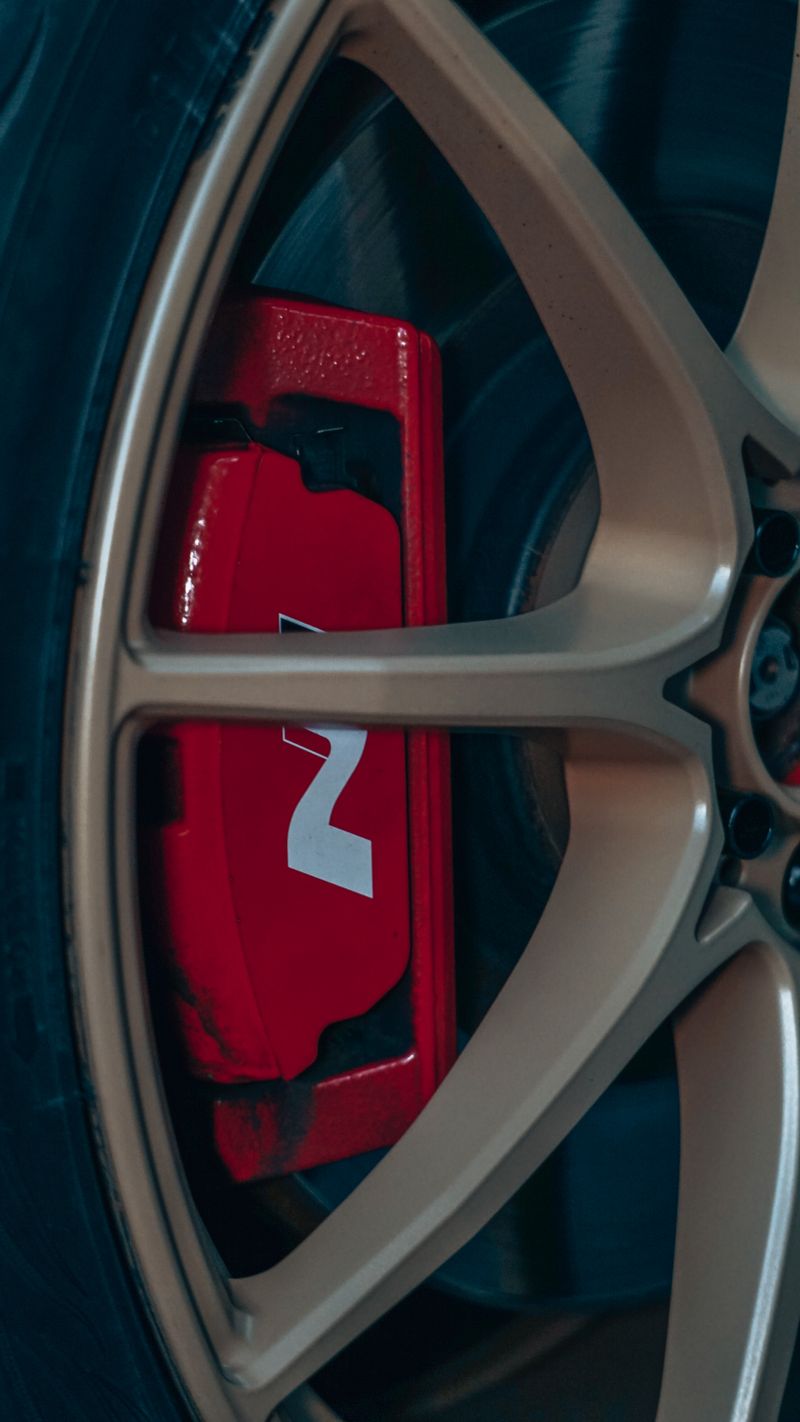
A caliper that doesn't fully release after braking can overheat the rotor on one side of the axle, causing uneven wear and vibration. Seized calipers often produce a car that pulls to one side during braking as well as excessive heat on one wheel. You might notice a burning smell after driving, or find that one wheel is dramatically hotter to the touch than the others after a normal drive. A seized caliper won't improve on its own — it needs to be rebuilt or replaced, along with the associated pads and often the rotor on that corner.Suspension and Steering Components
Not all braking vibration originates at the brakes themselves. Worn tie rod ends, ball joints, or control arm bushings can allow wheel movement under braking load that manifests as a shake felt through the steering wheel. These components normally keep your front wheels tracking precisely; when they're worn, the forces generated by hard braking can make the front end feel loose or shaky. A thorough brake inspection should always include a check of the suspension and steering components — at AutoZmotive, we look at the whole system, not just the obvious parts.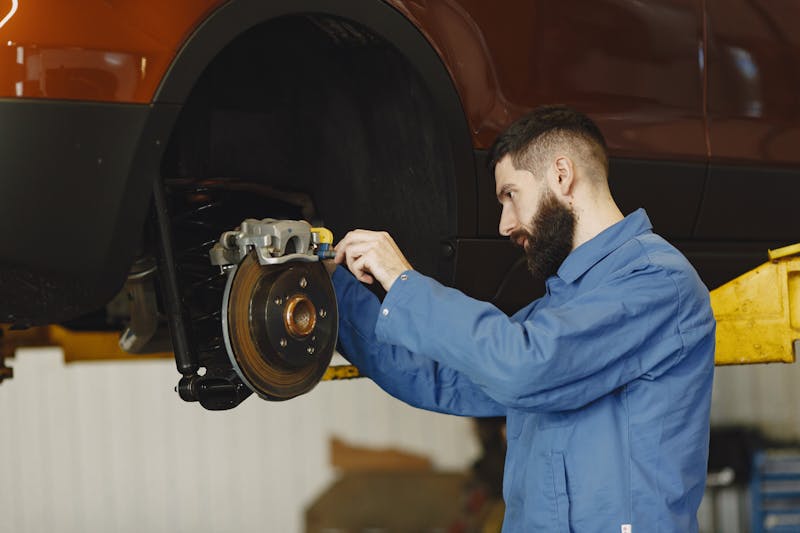
What to Do
If your car shakes when braking, don't wait for the problem to go away on its own — it won't. Get the vehicle inspected as soon as possible. Braking vibration that worsens over time can progress to longer stopping distances, uneven tire wear, and in severe cases, brake failure. When you bring your vehicle to AutoZmotive, we'll put it on the lift, measure rotor thickness and runout, inspect the calipers, pads, and rotors, and check the suspension for wear. We'll explain exactly what we find and give you a clear estimate before any work begins.Brake issues are not the place to cut corners or delay. If the steering wheel trembles every time you slow down, give us a call in Holmesburg or book an appointment online. We'll get to the bottom of it quickly and get you back to stopping smoothly and confidently.