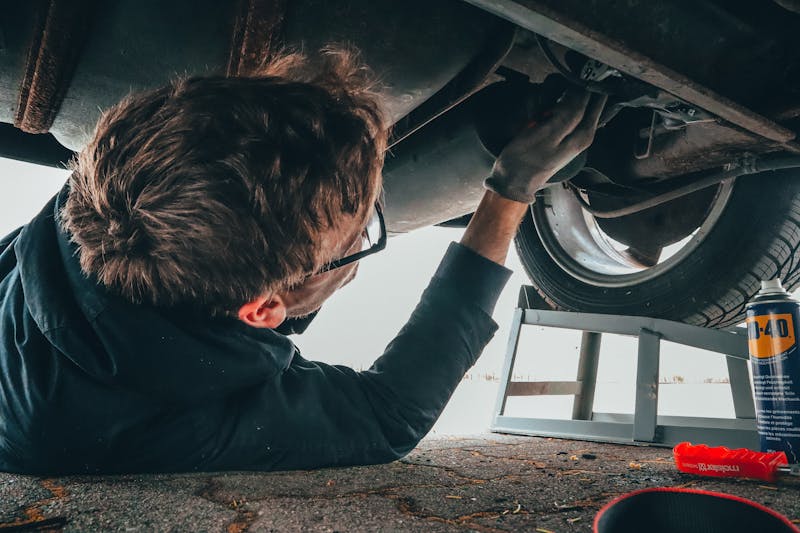
If you drive in Philadelphia, you know pothole season. Every spring, after months of freeze-thaw cycles have worked their way under the asphalt, the roads in Northeast Philadelphia and across the city reveal a new collection of craters, heaves, and crumbling edges. It's not just annoying — it's genuinely damaging to your vehicle. At AutoZmotive in Holmesburg, the weeks after winter consistently bring a surge of customers dealing with bent wheels, blown tires, damaged struts, and misaligned suspensions. A lot of that damage accumulates invisibly, one pothole at a time.
What Potholes Actually Do to Your Car
The physics of hitting a pothole are simple: your wheel drops into a hole and then strikes the far edge at speed. The impact is absorbed first by the tire, then the wheel, then the suspension. A single severe impact can bend or crack an alloy wheel, damage the tire sidewall (sometimes causing an immediate blowout, sometimes creating a bubble that fails later), displace wheel alignment, and in worst cases, bend suspension components. More commonly, repeated pothole impacts gradually knock your alignment out of spec, accelerate wear in ball joints, tie rod ends, and control arm bushings, and compromise shock absorbers and struts.Signs Your Suspension Has Taken a Hit
After a winter of rough roads, watch for these warning signs that your suspension needs attention: pulling to one side while driving on a straight, level road (alignment is off); uneven tire wear — wear concentrated on one side of the tread, or cupping — which also indicates alignment or suspension issues; a ride that feels rougher or more bouncy than it used to (shocks or struts); a clunking or knocking sound over bumps (worn links, bushings, or strut mounts); and the steering wheel sitting crooked when you're driving straight (alignment).
Wheel Alignment: The First Thing to Check
Wheel alignment is the adjustment of all four wheels' angles relative to each other and to the road. When alignment is correct, your tires wear evenly and your car tracks straight with minimal steering input. When it's off — as it frequently is after a winter of Philadelphia roads — tires wear unevenly and handling suffers. An alignment measurement takes about 30 minutes and immediately shows whether your angles are within spec. If your car drives straight, it doesn't guarantee alignment is correct — minor misalignment shows up as uneven tire wear first, before you notice a pull.Shocks and Struts: When to Replace
Shocks and struts are what control how your suspension moves — they dampen the oscillation that would otherwise continue after every bump. Worn shocks don't just make the ride rougher; they allow tires to bounce off the road surface instead of maintaining contact, increasing stopping distance and reducing handling predictability. A good test: press firmly down on each corner of the car and release. It should return to level and stop. If it bounces more than once, the shock or strut at that corner is likely worn. Most manufacturers recommend inspection at 50,000 miles; replacement at 75,000 to 100,000 miles on most vehicles.Tires: Inspect for Impact Damage
After winter, walk around your vehicle and carefully inspect each tire for sidewall bulges, bubbles, or cuts. A bulge in the sidewall means the internal structure of the tire has been compromised — the belts or cords that give the tire its strength have separated. A tire in this condition can fail without further warning. Also look at the tread for unusual wear patterns that developed over winter. If one tire is wearing significantly differently from the others, it's a sign that something in the suspension or alignment is causing it to sit at the wrong angle.
A Spring Suspension Check at AutoZmotive
Every spring, we recommend a suspension and alignment inspection for any vehicle that's been through a Philadelphia winter. On the lift, we can see what you can't from the driveway: the condition of every ball joint, link, and bushing; whether the struts are leaking; whether the subframe shows corrosion from road salt. We then put the car on the alignment rack and measure all four corners against factory specifications. If something is out, we fix it and recheck. If everything is within spec, you leave knowing your car is ready for another driving season.Your suspension is what stands between you and Philadelphia's roads. After a rough winter, give it the attention it deserves before spring driving ramps up. Bring your vehicle to AutoZmotive in Holmesburg — we'll check everything from wheel bearings to strut condition and let you know exactly where things stand. Book your spring suspension check online today.