The Wide Range of Brake Pad Life
Ask ten different mechanics how long brake pads last and you'll get ten different answers — and they're all correct. Brake pad lifespan typically ranges from 25,000 to 70,000 miles, a span wide enough to make any single number misleading. That range exists because pad longevity depends on a combination of factors: the type of pad material, your driving style, the kind of roads you travel, and even the weight of your vehicle. Understanding those variables puts you in control of how often you're reaching for your wallet at the brake shop.
Pad Material Makes a Big Difference
Not all brake pads are created equal. The three main types — organic, semi-metallic, and ceramic — wear at very different rates:
- Organic (non-asbestos organic, or NAO): Soft and quiet, but wear out fastest. Good for light-duty, low-stress driving. Typically last 25,000–35,000 miles.
- Semi-metallic: A blend of metal fibers and other materials. More durable and better at heat dissipation than organic pads. Common on performance and heavy vehicles. Typically last 35,000–50,000 miles.
- Ceramic: The premium option. Long-lasting, low dust, quiet operation. Best choice for most daily drivers. Often reach 50,000–70,000 miles or more.
How Your Driving Habits Affect Wear
Driving style is arguably the single biggest factor in brake pad longevity. Hard, frequent braking generates intense heat that accelerates pad wear dramatically. Highway drivers who rarely touch the brakes can go years between pad replacements. City drivers — like most people commuting through Philadelphia — may need new pads twice as often. Specific habits that shorten pad life include: riding the brakes downhill, braking late and hard instead of coasting, and carrying heavy loads that increase stopping demand. Simply giving yourself more following distance and allowing the car to coast before braking can meaningfully extend pad life.
Vehicle Weight and Brake System Design
Heavier vehicles put more thermal and mechanical stress on brake pads with every stop. A full-size pickup truck or SUV will typically go through pads faster than a compact sedan, even with identical driving habits. The design of the brake system also matters — some vehicles run smaller rotors and calipers that put more demand on the pad material. If you've noticed your brakes wearing unusually fast, it's worth having the caliper slides inspected: a sticking caliper keeps the pad in partial contact with the rotor even when you're not braking, causing rapid, uneven wear.
Road Conditions in Philadelphia
Philadelphia's roads are notoriously rough. Potholes, stop-sign-heavy neighborhoods, and dense traffic all push braking systems harder than suburban or rural driving. Holmesburg and the surrounding Northeast Philadelphia streets see their share of heavy traffic and tricky intersections, which means local drivers often find themselves at the lower end of the pad-life spectrum. Factor that into your service planning — if the manufacturer says inspect at 30,000 miles, you may want to take a look at 20,000 if you're doing a lot of city driving.
Warning Signs That Pads Are Worn
Modern brake pads have built-in wear indicators — small metal tabs that contact the rotor and produce a high-pitched squealing sound when the pad is nearly gone. That squeal is your cue to schedule service soon, not an emergency in itself. A grinding sound means the pad is fully worn and metal is contacting metal — at that point, the rotor is likely being damaged with every stop. Other signs include a brake warning light, longer stopping distances, or a vibrating pedal. Don't wait for grinding; act on the squeal.
How to Make Brake Pads Last Longer
- Increase your following distance and coast before braking
- Avoid carrying unnecessary weight in your vehicle
- Choose ceramic pads at your next replacement for maximum longevity
- Have caliper slides cleaned and lubricated at every brake service
- Use engine braking (downshifting or lifting off the throttle) on hills
- Get brake inspections every 12,000 miles or at every other oil change
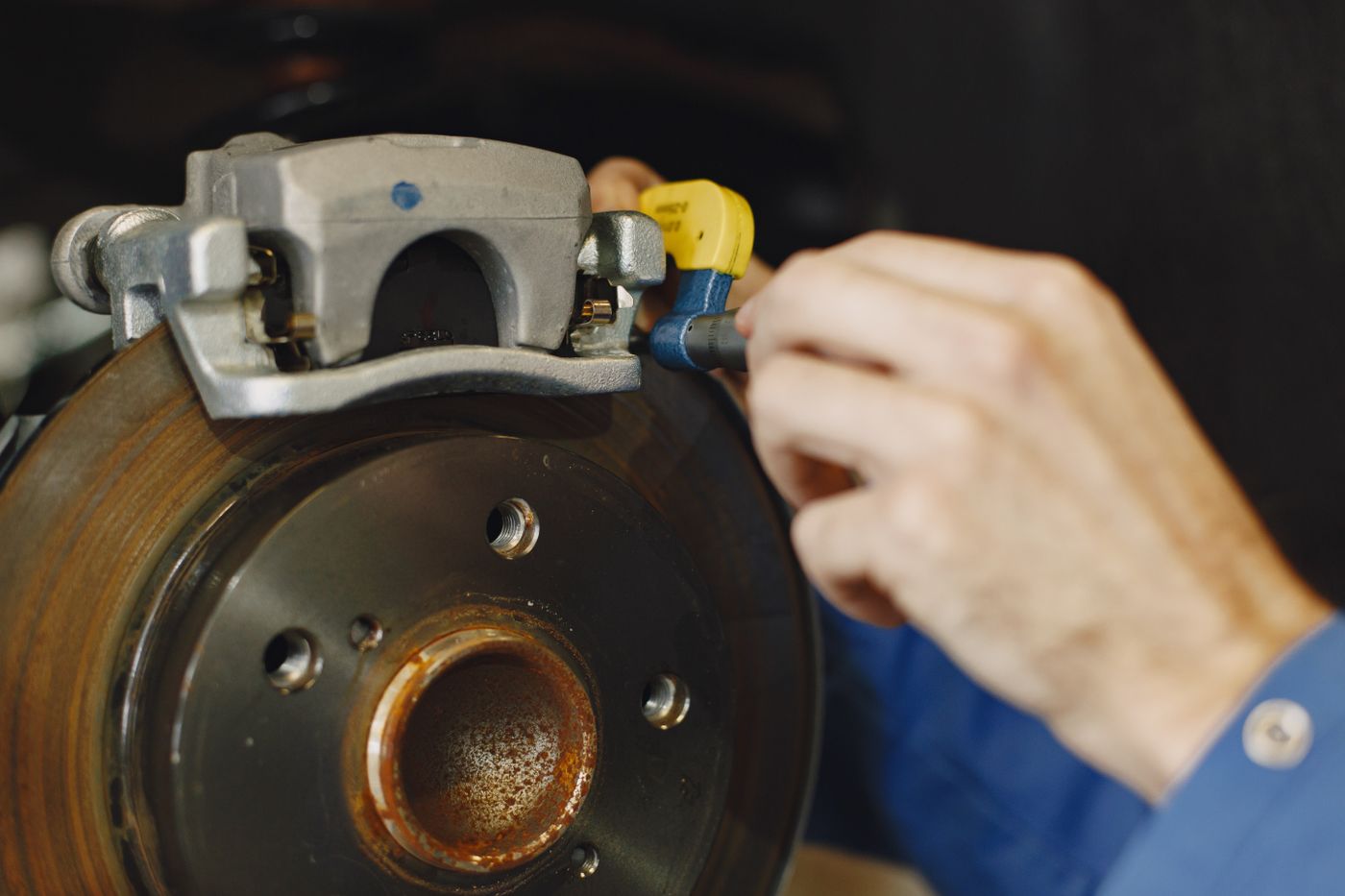
At AutoZmotive in Holmesburg, we check brake pad thickness as part of our multi-point inspection so you always know exactly where you stand. If you're unsure how much life is left in your pads, book a free visual inspection online — it takes just a few minutes and can save you hundreds down the road.